



At the start of 2025, we talked about 2024 being a year of transitions as we welcomed in new leadership and completed several large national projects. Throughout these dynamic shifts in our organization and in the broader nonprofit and social economy landscape we drew from the wisdom in our Navigating Change for Leaders curriculum and turned our attention to investing in CCEDNet’s organizational capacity and setting the groundwork for a renewed sense of purpose.
With a strategic pause in major projects and reduction in our communications output we were able to focus internally on our operational framework. We spent time clarifying our team structures together. This involved redefining our roles, forming teams, establishing accountability, and determining our decision making process (we use a matrix that identifies key areas for decision making and who has the responsibility in each area to raise proposals, provide advice, make decisions, and put the decisions into action). We also invested time in reorganizing our information and project management systems to allow us to focus on the information that matters most and to streamline the administration of our work.
Relationships have always been important to how we function as a network. In 2025 CCEDNet staff continued to focus on the connections we have with members and facilitating relationships between members. The People-Centred Economy (PCE) Group remains an important solidarity collective that CCEDNet convenes with other umbrella organizations who share similar values and interests. The PCE Group engages in mutual support, especially around policy and advocacy work. We have also been focussing on forging new and deeper relationships with funders.
Our commitment to learning programming also continued in 2025. CCEDNet partnered with Coast Capital to provide access to 7,000 learning licenses through Coursera for CCEDNet members. And in the Spring we ran our 3-day Understanding Social Impact Measurement course where practitioners learned to use appropriate social impact measurement tools to define, measure, and showcase the outcomes of their organization’s activities.
Looking Ahead
We have been diligently identifying the opportunities that lay ahead of us and developing plans to bring our ideas to fruition. With early support from the McConnell Foundation, we developed a field needs assessment to gather real-time insights that highlight emerging priorities, opportunities, and gaps across the field. The needs assessment was launched in early 2026 to members and field contributors, inviting input from those actively shaping, advancing and working with communities within the field.
Following internal analysis of the assessment findings, we look forward to engaging in strategic dialogue with members and stakeholders to shape a compelling vision for the future of community economic development in Canada. Here is a sneak peek of what we found so far.
A Sneak Peek: Emerging Signals from the 2026 Needs Assessment
While the full findings will be explored through a series of virtual convenings, several strategic themes are already emerging from the data.
1. The field is being asked to solve bigger problems than it was designed for.
Community economic development organizations are increasingly positioned as local responses to housing affordability, economic insecurity, workforce challenges, climate resilience, and social inclusion. The survey suggests that expectations placed on the sector continue to grow, raising important questions about whether existing resources, structures, and supports are keeping pace.

2. Community innovation is outpacing community infrastructure.
Respondents described significant innovation occurring across communities, yet many continue to face barriers related to funding, staffing, data, evaluation, and organizational capacity. The challenge may not be a lack of solutions, but rather a lack of the infrastructure required to sustain and scale them.
4. The next frontier may be ecosystem development, not organizational development.
While many organizations continue to seek support for their own growth and effectiveness, respondents also emphasized the importance of collaboration, knowledge sharing, partnerships, and collective action. The findings point toward a future in which strengthening the connections between organizations may be as important as strengthening individual organizations themselves.

5. The sector is entering a period of strategic choice.
The data suggest a growing opportunity, and need, for the field to define a shared agenda. Questions of policy influence, community wealth building, measurement, financing, workforce development, and local economic resilience are increasingly interconnected. The challenge ahead is not simply how organizations respond to change, but how the sector collectively shapes it.
What’s Next?
Our upcoming strategic dialogue will move beyond the findings themselves to explore their implications. Together, participants will help answer:
- What infrastructure is needed for the next generation of community economic development?
- How can data be transformed into a shared strategic asset for the field?
- What forms of collaboration will generate the greatest collective impact?
- Where should advocacy and policy efforts be focused?
- What would it take to move from isolated successes to systems-level change?
The conversations ahead are designed not only to interpret the data, but to help define the future direction of community economic development in Canada.
Learning & Capacity Building
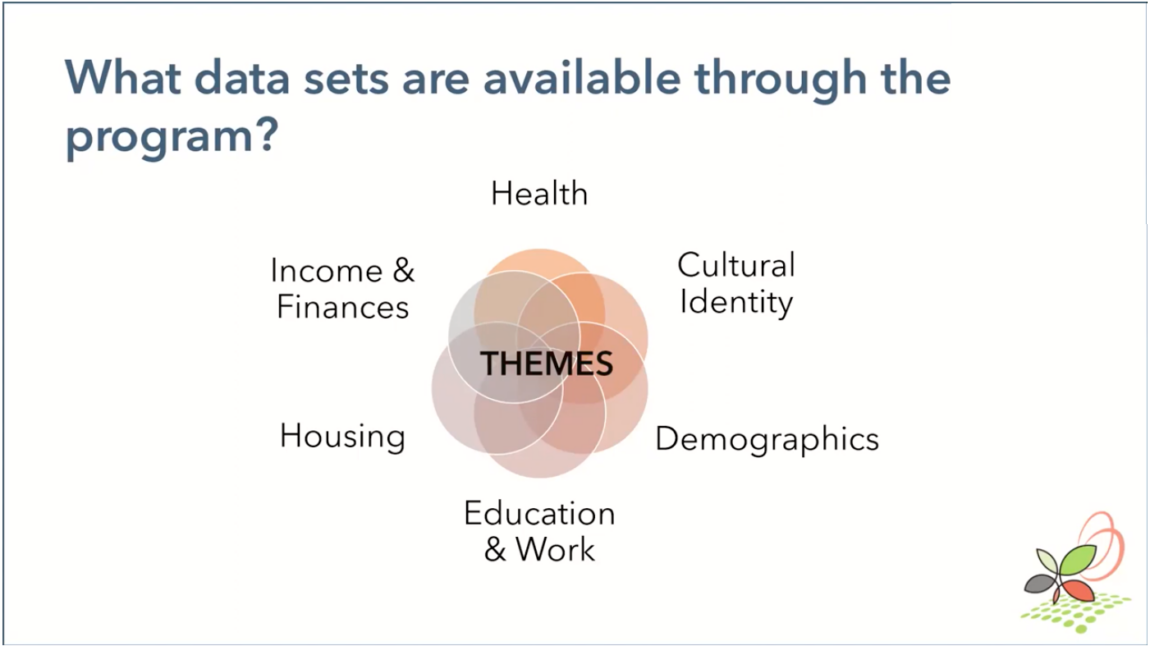
In 2019 CCEDNet became the host for the Community Data Program (CDP). We recognized the important role of data in community economic development and wanted this valuable work to continue as CDP’s previous host, the Canadian Council on Social Development, wrapped up operations.
Today, the CDP continues to provide community organizations, researchers, and practitioners across Canada with access to high-quality local data, tools, and analytical resources that support evidence-based decision-making. Through a network of 30 community data consortia, strong partnerships with organizations such as Statistics Canada and the Canada Mortgage and Housing Corporation, and ongoing engagement with more than 2,500 community data practitioners, the CDP helps communities better understand and respond to local challenges and opportunities.
In 2025, the program expanded access to customized Census data, launched new data visualization tools, including a Rental Housing Affordability Dashboard, and continued to build capacity through webinars, technical support, and its first national learning and networking retreat.
Community data program
A Sneak Peek Ahead
One of the strongest signals emerging from CCEDNet’s 2026 Needs Assessment is that data is increasingly being viewed not only as a reporting requirement, but as a strategic asset. Organizations consistently identified challenges related to accessing, interpreting, and applying community-level data to inform decision-making, demonstrate impact, and strengthen advocacy efforts.
Recognizing this need, CCEDNet is intentionally engaging the CDP as part of its broader effort to strengthen the community economic development ecosystem. Upcoming virtual convenings will explore how data can better support local action, collective learning, and systems-level change. Stay tuned for more.
Networking & Collaboration
CCEDNet Manitoba

The core work of CCEDNet Manitoba is supporting our formal members to engage with us, each other, and the wider field to build strength, knowledge, and connection. This is ultimately all in service of building community power to advance a collective vision for sustainable, equitable, and inclusive economies.
Members come together to guide the network, passing public policy resolutions at the annual Policy Summit, and ensuring staff know what is most important. We also use the power of the network to support several coalitions advancing key areas of our local mandate.
In 2025, CCEDNet Manitoba’s network weaving work included:
- Answering 45 information brokering requests
- Participated in 19 public engagements (e.g. tours, presentations, lectures, letters of support, etc.) with over 950 participants
- Convened 6 coalitions in 48 meetings (411 participants, 196 organizations) to advance issues such as social enterprise sector development, social and affordable housing, poverty elimination, coordinated capacity building and sector development for community non-profits
- Advocated to federal, provincial and municipal governments with 4 submissions and 2 meetings with key government officials




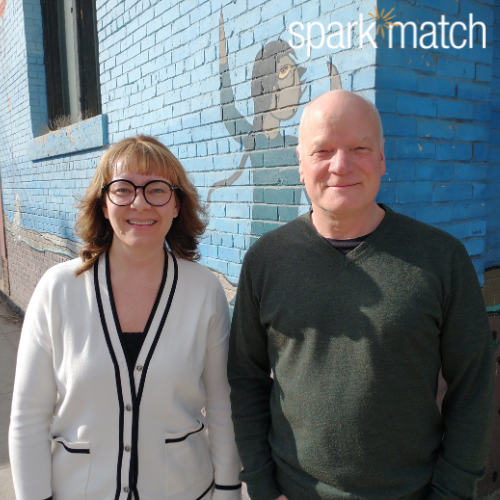
CCEDNet Manitoba’s Spark program matches organizations working on critical issues in Winnipeg with people wanting to donate their professional skills for social good. As one of the three programs of CCEDNet Manitoba, Spark has a wide-angle or 360 degree view of the sector. This helps us to connect new initiatives or ideas to relevant people and organizations, in order to maximize their impact and avoid duplication or dilution of existing resources and organizations.
In 2025, Spark had 92 service requests from community organizations to help them problem solve and build connections and power.
The Spark program made 14 pro bono matches between local organizations and skilled professionals and 30 specific referrals in 2025.
Every year CCEDNet Manitoba’s Spark program also presents the Spark Outstanding Pro Bono Consultant Award at the Volunteer Manitoba Volunteer Awards Gala. This year we presented the award to fundraising expert, Kalyn Murdock.